Map Of Turkey

Homepage | Turkey in World Heritage | Great Mosque and Hospital of Divriği


«

Great Mosque and Hospital of Divriği


Lİttle Brief About Great Mosque and Hospital of Divriği

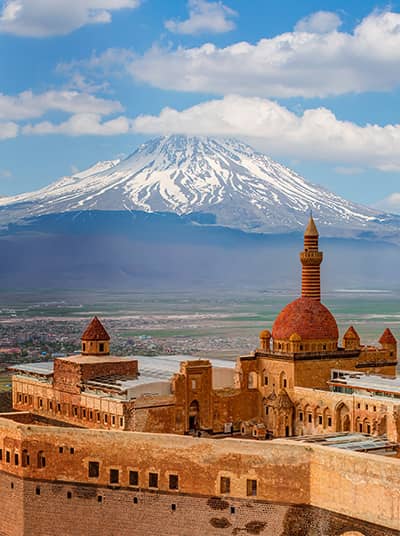
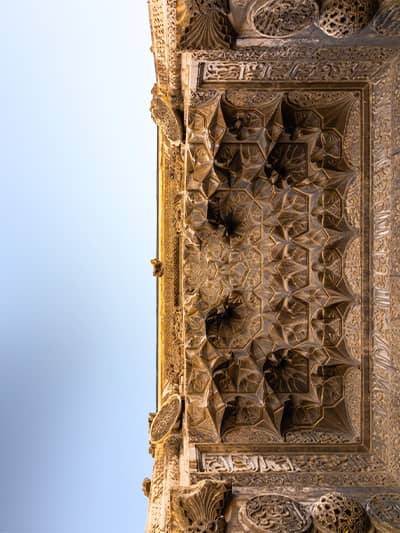
This region of Anatolia was conquered by the Turks at the beginning of the 11th century. In 1228–29 Emir Ahmet Shah founded a mosque, with its adjoining hospital, at Divrigi. The mosque has a single prayer room and is crowned by two cupolas. The highly sophisticated technique of vault construction, and a creative, exuberant type of decorative sculpture – particularly on the three doorways, in contrast to the unadorned walls of the interior – are the unique features of this masterpiece of Islamic architecture.

History of Great Mosque and Hospital of Divriği

The Divriği mosque is an outstanding example of Selçuk mosques in Anatolia, having neither a courtyard, colonnades, nor an uncovered ablutions basin, but which (owing perhaps to the harshness of the climate) organizes all religious functions in an enclosed area. A charitable foundation, the contiguous hospital makes an already exceptional ensemble even more interesting thanks to a princely command.

Far away from the major communication links at the south-east of Sivas province in eastern Anatolia, the mountainous region of Divriği (Tephrike in the Byzantine Empire) was a 12th-century refuge for the Paulician Christian sect which was persecuted by Basil I and then by John Tzimisces, who exiled their survivors to Thrace. From there the heresy gradually moved westward, gaining followers of varying degrees of loyalty such as the Bogarmils or Cathars.

After 1071, Divriği fell to the Turks. In 1118 the city was given to Mengücek Bey and the dynasty of the Mengücekids governed the province virtually without interruption until the Mongol occupation in 1277.

The rectangular ensemble of buildings, which occupies the south-west slope of the hill from which Divriği Castle rises, dates back to this first Turkish period. There is a mosque which was founded in 1228-29 by the Mengücekid emir, Ahmet Shah, and amarestan (hospital for the insane) endowed by his wife, Malikaturan Malik. These two complementary monuments were built simultaneously by the same architect, Khurramshad of Ahlat.

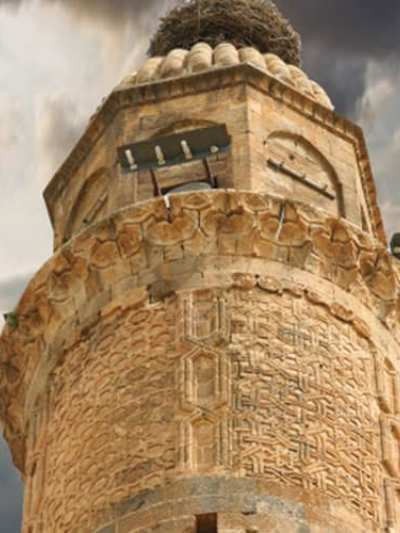
The sole prayer room in the great mosque has five aisles, each consisting of five bays. It has stone vaulting and above are two cupolas of unequal size. One is above the ablutions basin and the other is above the mihrab (prayer niche). The second cupola is the principal one, recognizable from the exterior by its hexagonal spire.

With its ribwork on pendentives, it is the most refined piece of architecture that the mosque has to offer. Yet each of the 16 remaining vaults is an amazing technical feat: the vaulting of the hospital room is comparable in scientific achievement, making use of a spacious design of perfectly pure lines. The principal nave opens towards the east on an iwan (three-sided, vaulted hall open at one end) and laterally on to two iwans flanked by small rooms. Such a layout makes possible isolation as well as contact in a communal area.

From the outside, the Divriği ensemble provides a gripping contrast between the low, blind walls of its rectangular enclosure and the three immense gates which afford access to the hospital at the west and to the mosque at the north and west. These three high, recessed gates with their exuberant decor which is both floral and geometric have been the subject of the most paradoxical of comparisons with Khmer and Gothic monuments. As was the case with the vaulting in the mosque and the hospital, the architect most likely drew his inspiration from contemporary Armenian or Georgian motifs, transposing them in an ingenious fashion.

There is a fourth and more recent opening at the east side which can probably be traced back to 1241.


Accommodation
  • Room :
  • Adult :
  • Child :
Flights
  • Roundtrip :One way :
  • Adult : Child (2-12) :
Tour
Transfer
  • Vehicle Type :
  • Vehicle Class Type :
  • Transmission Type :
  • Has Air Condition :
  • Mileage Charge Type :
Stories All Stories
  • Every Sunday, a brunch is being held in the ancient Byzantine Monastery in Gumusluk. The property is privately owned, andMore >>

  • Turkey is not a skiing destination, at least for now. But Europeans who love Turkey and skiing, or Turkish citizensMore >>
  • Information on some things to do when in Assos, one hour south of Troy (by car) Walks: Through the manyMore >>
  • Once i was in kuşadası, and i loved this city. people are very friendly, and beaches are very good, andMore >>