Where to go ?
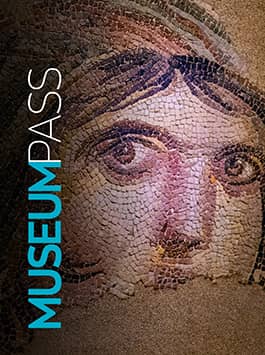
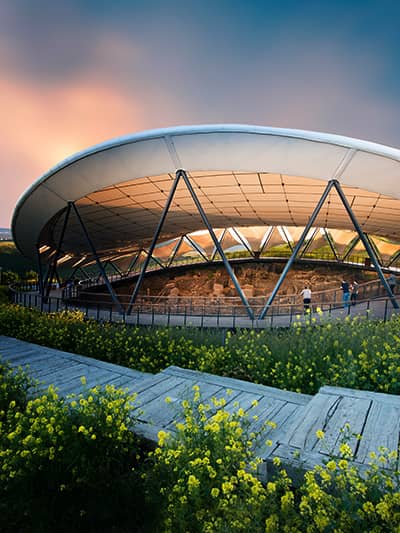
Gaziantep Archeology Museum: The museum hosts ceramic pieces from Neolithic Age, various objects, figures, seals from Calcolithic and Bronze Age, stone and bronze objects, jewelry, ceramics, coins, glass objects from Urartu, Hittite, Persian, Roman and Byzantium periods, the bones and remains of a Mammoth, mosaics with high art values, statues and tomb steles obtained from the ancient city of Belkıs (Zeugma).
Another attractive section in the museum is the Technology Section and Nostalgia display cabinet. In these sections, the cameras, old radios, gramophones, typewriters, old sewing machines, century old wall clocks and old postcards displaying the development of Gaziantep are exhibited.
Museum Tel: (+ 90 - 342) 231 11 71
Address: Kamil Ocak Avenue No: 2 Şehit Kamil
Open hours to visit: 08.30a.m - 12.00a.m / 13.00p.m - 16.45p.m
Open days to visit: Everyday except Mondays
Hasan Süzer Ethnography Museum: This museum was founded inside an old and restored traditional Antep house constructed at the beginning of the 20th century by Hasan Süzer. The museum has been hosting the Ethnography section of the Gaziantep Museum since 1985.
In a separate section of the house, the weapons and the war equipment used in the defense of Antep, documents and the photos of the heroes, war veterans and martyrs are exhibited. Other sections of the house are decorated with the authentic objects reflecting the daily lifestyle.
Museum Tel: (+ 90 - 342) 230 47 21
Address : Eyüboğlu Quarter, Hanifioğlu Street No: 64 Şahinbey
Open hours to visit: 08.30a.m - 12.00a.m / 13.00p.m - 16.45p.m
Open days to visit: Every day except Mondays
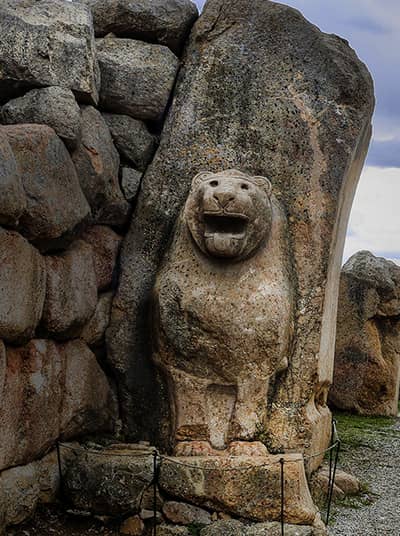
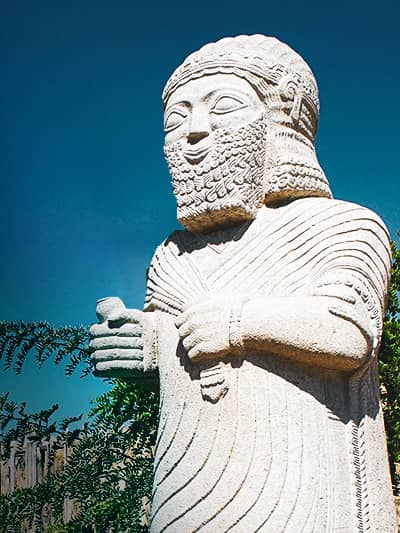
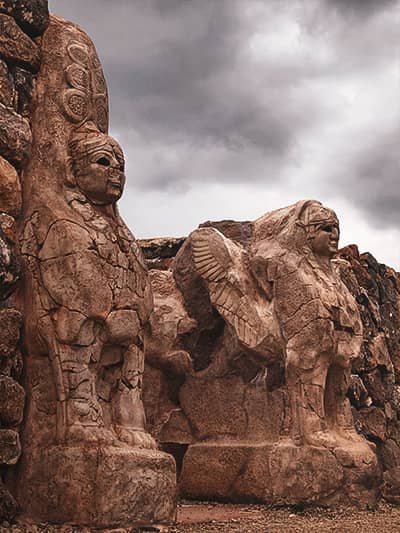
Yesemek Open Air Museum: The museum is located at the skirts of Karatepe hill, located southeast of Yesemek village which is 23 km. southeast of İslahiye district. The museum is stated as "Yesemek Stone Mine and Sculpture Workshop" in the publications and approximately 300 statues and sculpture rough drafts were discovered in the excavations. The workshop was operated by Sam'al (Zincirli) Kingdom in between 1375 - 1335 B.C in the Late Hittites period and the native folk of Hurri were worked in this workshop. After the destruction of Sam'al (Zincirli) Kingdom at the end of 9th century B.C by the Asurian civilization, The Stone Mine and the Sculpture Workshop was closed and the working folk had abandoned the area.
At the present day, it is possible to watch the progress of sculpture making at the sculpture workshop which was founded over an approximate area of 100 acres. An approximate quantity of 300 sculpture rough drafts had been excavated from ground and exhibited in a particular formation in the Open Air Museum. The museum contains pieces depicting sphinxes, lions, mountain gods, bear man and various architecture pieces.
Museum Tel: (+ 90 - 342) 875 10 55 Address: İslahiye District Yesemek Village Open hours to visit: 08:30a.m - 12:00a.m / 13:00p.m - 16:45p.m
Belkıs / Zeugma: Belkıs / Zeugma ancient city was founded by the general of Alexander the Great Seleukos Nikator in the 3rd century B.C at the banks of the Kızılırmak River, 10 km east of Nizip district of Gaziantep, over an approximate area of 20 thousand acres.
The first name of the ancient city was Seleukeia Euphrates. The ancient city had entered under the reign of Roman Empire in 64 B.C and it was renamed as "Zeugma", which means "passage way" or "bridge". The ancient city of Belkıs / Zeugma was an important Legion city in the Roman and Byzantine Periods and was one of the most important four cities of Commagene civilization.
At the skirts of the ancient city facing the Fırat River the mansions of the wealthy citizens was constructed and the floors of these houses were covered with numerous mosaics with high art value. Numerous rock tombs are located in the Necropolis and lots of tomb steles, statues and human skeletons were discovered.
Dülük: This ancient city was located 10 km south of Gaziantep city center. The ancient city was located on the historical Silk Road. At the Şarklı Cave located in the borders of this ancient city, tools made of stone were discovered proving the settlement of the mankind in the region at 6000 B.C. The ancient city is known as Doliche in the history and was the religious center of Teşup, the master deity of Hittite civilization. Numerous rock tombs and churches carved into rocks are available for visit at Dülük village.
Ruins of Karkamış: Some parts of the Karkamış ruins are inside the borders of Syria. The ruins of Karkamış are located to the south of Karkamış district and its historical background extends to the Neolithic periods. The Legend of Gılgamesh was described on the Karkamış ruins in the Late Hittite period. The findings discovered from this ruins are exhibited in the Ankara Anatolian Civilizations Museum.
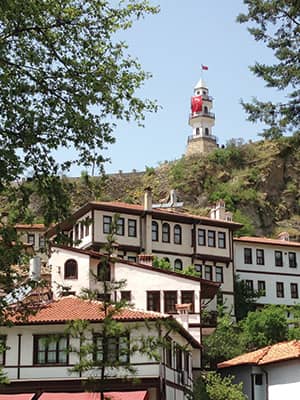
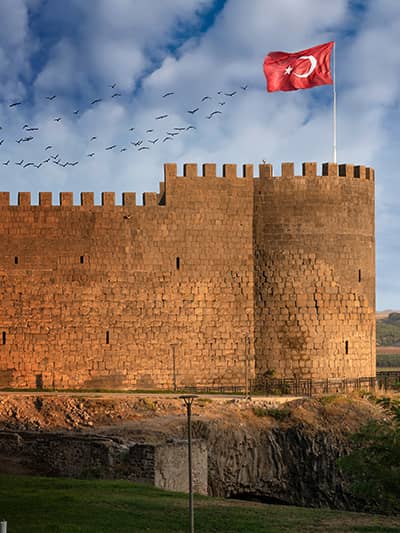
Gaziantep Castle: Gaziantep Castle is one of the beautiful samples of the castles that could withstand the destruction of time. The definite period of construction and its original inhabitants are unclear.
There are some rumors about the castle's origin as it was initially constructed as a frontier watch tower in Roman period and extended in time to become a castle and attained the current form in the Byzantine Emperor Justinianus period in 6th century A.D. The ruins of a bath, cisterns, small mosque and various other structures are located inside the castle.
Hours of Visit: 08.30a.m - 12.00a.m / 13.00p.m - 16.45p.m
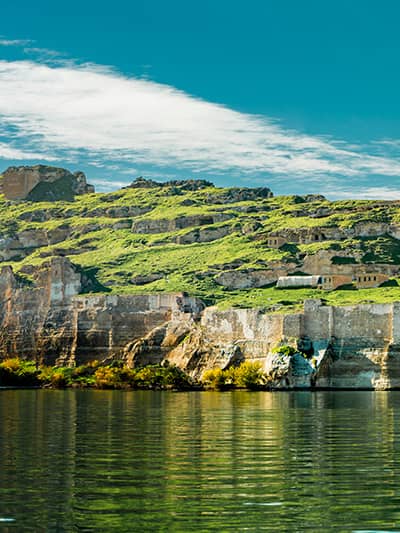
Rumkale:(Hromgla) Castle is located on a dominant hill covered with high and steep rocks at the western shores of Fırat River, where it joins with Merziman Creek at the Kasaba village of Yavuzeli District of Gazinatep province. It is estimated that the Johannes, Apostle of Jesus Christ live in the vicinity of Rumkale and try to spread Christianity in the Roman period at this locality and also it is estimated that Johannes hide his drafts of Holy Bible in a room carved in the rocks and later this Bible of Johannes was taken to Beirut. The tomb of Johannes is located in the castle and therefore the castle is a sacred place for Christians. .
|
Inns: As Gaziantep is located on the course of Historical Silk Road, there are numerous inns and caravanserais remained from this period. The most important samples of these inns and caravanserais are Tuz Inn, Şire Inn, Tütün Inn, Hışva Inn, Mecidiye Inn, Emir Ali Inn, Anadolu Inn, Kürkçü Inn, Belediye Inn, Elbeyli Inn, Yeni (Yüzükçü) Inn, Hacı Ömer Inn and Millet Inn. |