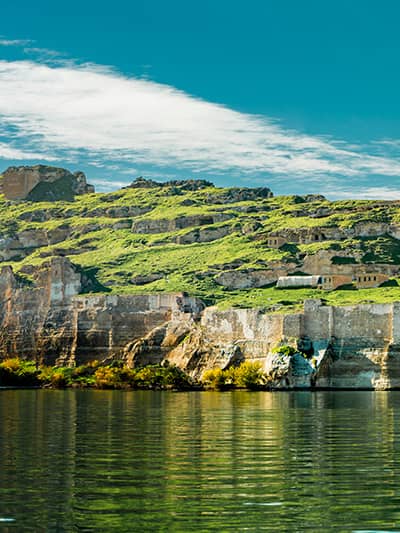
Zeugma
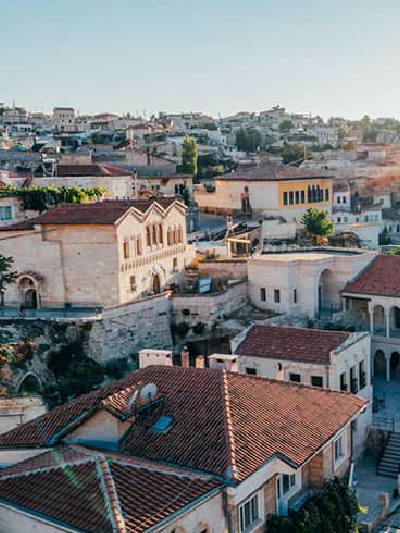
Zeugma is Turkey’s southeast province of Gaziantep and was until recently best known for its highly developed industrial areas, pistachio nuts and baklava (national Turkish sweet pastry).
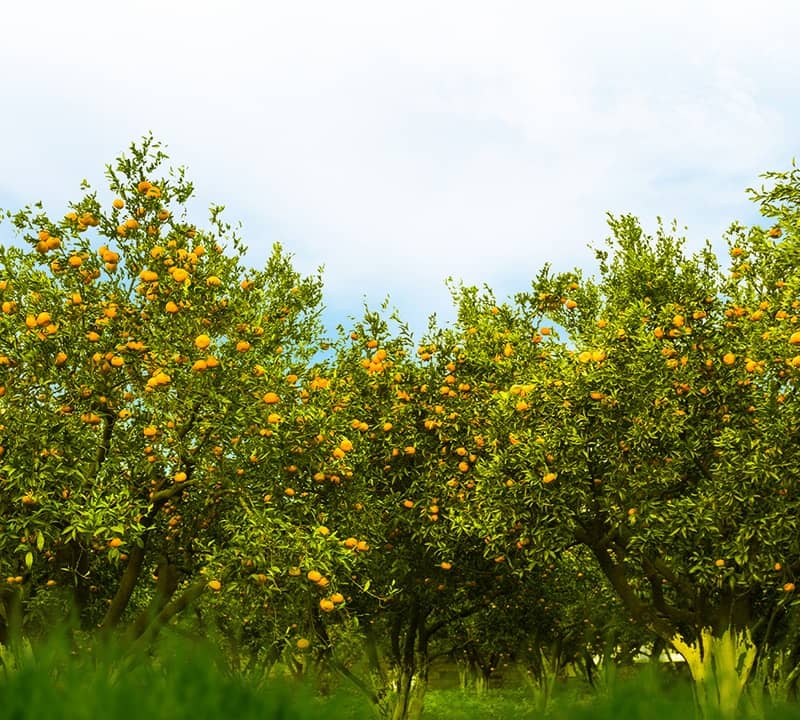
Forty-five kilometers away from Gaziantep close to the town of Nizip on the Euphrates is the tiny village of Belkis, whose inhabitants carefully tender their
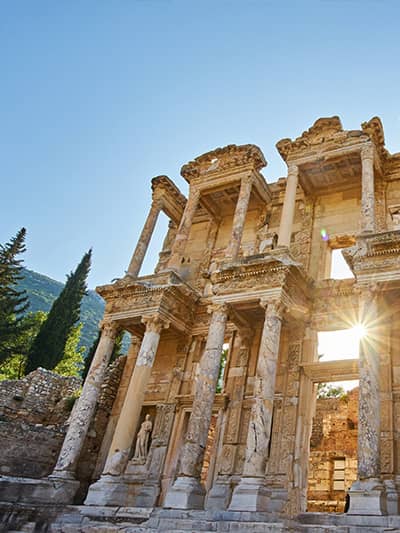
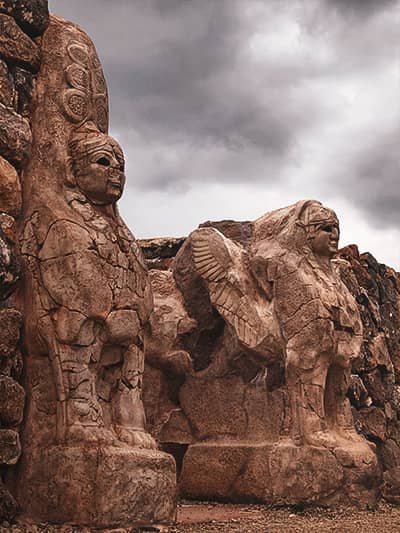
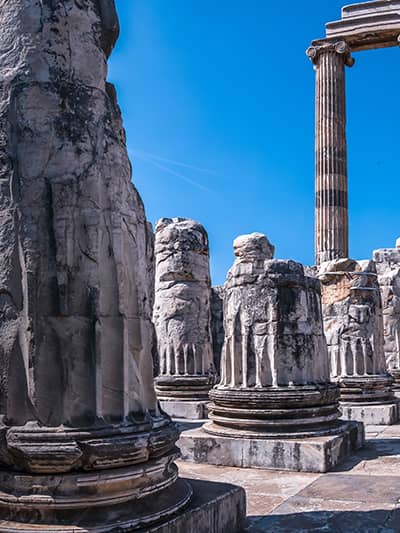
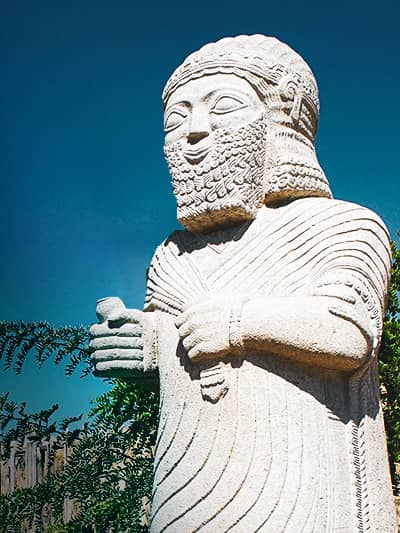
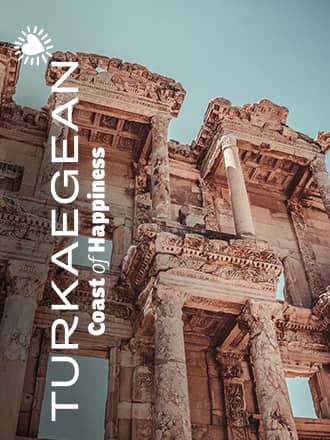
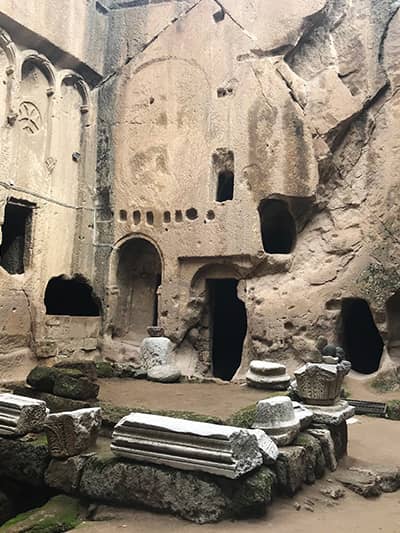
groves of pistachio trees. The nuts are their sole source of income. Yet not all wealth can be measured in currency, and the villages real asset is the magnificent ruins of the ancient city of Zeugma, which has stayed buried beneath the pistachio groves for nearly two thousand years.Belkis/Zeugma is considered among the four most important settlement areas under the reign of the Kingdom of Commanage.In the Hellenistic Era the city was called “Seleukeia of Euphrates”.
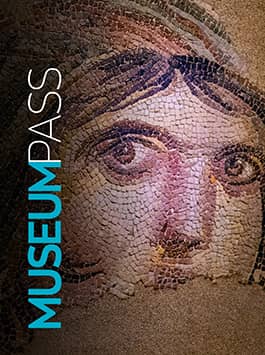
During the excavations in 1992, an important base mosaic was found in a Roman villa, belonging to Dionysus, however 2/3 of it which was demonstrated in-situ was stolen in 1998. During the excavations in 1993, the terrace mosaics of Roman villas disappeared. The 2- figure panel of the mosaic found was cut and extracted as a result of illegal excavations and smuggled abroad 25-30 years ago. It was determined in 1994 that the works are in the Houston Menil Collection, and agreement was reached as a result of mutual negotiations, and the mosaics were returned to our country in the second half of June.
Either the Gaziantep Governorship Province Private Administration or the Birecik Dam Consortium provided financial contribution to the studies performed, in addition to the resources of the Ministry of Culture.
The archaeological rescue and documentation studies in 2000, will be carried out under the management of the Ministry of Culture and coordination of SAP, with participation of the Prime Ministry, the South Anatolian Project Regional Development Administration (SAP-RDA), the Packard Humanities Institute (PHI), the Birecik Dam and Hep Installation and Operation Co. Inc, an agreement record was signed between SAP Administration and PHI on June 07, 2000 to carry out urgent archaeological rescue studies in the Ancient Zeugma City and SAP region. According to this agreement record, PHI has undertaken to finance the studies up to USD 5 millions.
The points having archaeological importance in Zeugma are handled in three sections:
Area A:
A lower terrace which will fall under water in June 2000,
Area B:
Other sections which will fall under water in October 2000.
The archaeological rescue and the documentation studies in the areas A and B which are to fall under water and less than 1/3 part of Ancient Zeugma City will remain, are being carried out by an extensive team formed by Turkish, French, American, Australian, Austrian and English (the Oxford Archaeological Unit) archaeologists, managed by the Ministry of Culture, the General Directorate of Monuments and Museums, the Gaziantep Museum Directorate.
Area C:
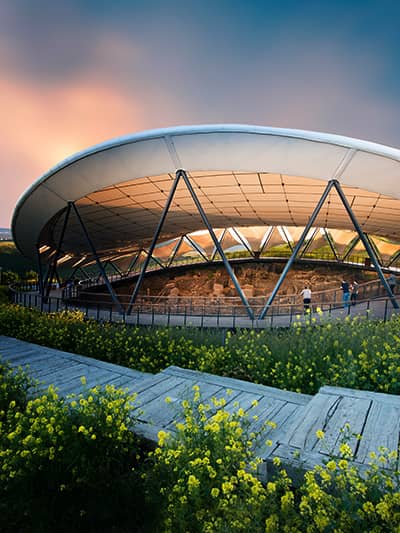
As regards the studies to be carried out in this section which is larger than the sum of the areas A and B, and will not fall under water, the Ministry of Culture, the General Directorate of Monuments and Museum, the SAP Administration and the PHI have reached a principal agreement, and a detailed program is being studied. In this area, a long term excavations, restoration and conservation of movable and immovable works, development of an open archaeological stand, as well as construction of a museum are contemplated, and expropriation operations are foreseen to be included to realize them. Mr. M. İstemihan TALAY, the Minister of Culture attempted for expropriation of the site at the highest level. On the other hand, it was stated that the PHI is also ready to assign funds for expropriation, upon agreement.
As can be seen, various self-sacrificing studies were carried out in different fields in Ancient Zeugma City for a long time. However, a wrong impression was established among the public that the studies in Zeugma were first started in 2000. Our Ministry endeavours to keep the public informed correctly on this subject. Read More
History & Heritage
The ancient city of Zeugma, originally, was founded by Selevkos Nikador, one of the generals of the Alexander the Great, in 300 B.C. At that time the city was named after the general and called “ Selevkaya Euphrates.” And the population in the city was approximately 80 000. In 64
Read MorePlaces of interest
Museums in Gaziantep Gaziantep Museum of Archaeologyhosts ceramic pieces from theNeolithicAge; various objects, figures and seals from theChalcolithicandBronze Ages; stone and bronze objects, jewellery, ceramics, coins, glass objects, mosaics and statues from theHittite,Urartu,Persian,RomanandByzantineperiods. Themosaicsof the ancient city ofZeugmaare also displayed at the museum. Hasan Süzer Ethnography Museumhas the old life
Read MoreAir
Gaziantep Airport is 15 km from city center. You can reach the city center from the airport with the Havaş shuttle service (9 lira, departs after most incoming flights).
Read MoreBus
The main intercity bus station (otogar) of the city is quite a few kilometers out of town. It is connected to city centre by local public buses, which cost 0.95 TL one-way. The bus fromSanliurfa(Urfa(alsoŞanlıurfa, formerlyEdessa) is a city inSoutheastern Anatolia, and the provincial capital of Şanlıurfa Province, is situated
Read MoreTrain
WhileToros Expresscoming in fromIstanbulviaKonyaandAdanawas suspended in 2008 (and it is not certain when and if it will resume service), Turkish State Railways put a weekly passenger train service from Gaziantep toMosulinnorthwestern Iraqrecently, which crosses a short strip ofSyrianterritory. It departs from Mosul at noon every Tuesday and arrives in Gaziantep
Read More